
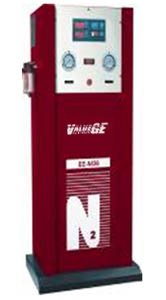
NITROGEN TYRE INFLATORS
BENEFITS OF NITROGEN FILLED TYRES
Less corrosion – because unlike air there’s no moisture in pure nitrogen
Slower rate of pressure loss – nitrogen molecules are larger than oxygen molecules (which make up 21% of compressed air)
Air loss can occur through the inner liner of the tyre as well through the valve, punctures, or failure of the seal between tyre and wheel rim. Pure nitrogen might leak more slowly through the liner, but you would still have to check tyre condition and pressure regularly.
Corrosion of the tyre from using normal compressed air is unlikely anyway because only the outer tread band of a car tyre contains steel – the amount of moisture reaching it from the inside is minimal.
To change to nitrogen you have to have the air already in the tyres removed before the tyres are re-inflated with purified compressed nitrogen. There will be a one-off charge per tyre but once filled with nitrogen, future top-ups would have to be with nitrogen if any advantages are to be maintained.
Overall, while accepting the possibility of purified nitrogen being of benefit in certain applications, we don’t think that the cost and possible inconvenience are justified for normal passenger car use.

|
|

|
|
| MODEL | VGE-NI35P | VGE-NI36 | VGE-NI60P |
| Power suppy | 100-240V/50-60Hz | ||
| Power consumption | 35VA | 30VA | 30VA |
| Temperature | -20℃/70℃ | ||
| Air input | 6-8.5 BAR | 6-10 BAR | 6-8.5 BAR |
| Nitrogen purity | 95-99+% | >95% | 95-99+% |
| Nitrogen output | 58L/min (2.0cfm) | 58L/min (2.0cfm) | 93L/min (3.3cfm) |
| Max. pressure (tank) | 102PSI/7bar/700KPa | ||
| Tank capacity | 50L | ||
| Display | LCD | Digital tube | LCD |
| Keyboard | Mental | Plastic | Mental |
| OPS | Yes | No | Yes |
| N2P | Yes | NO | Yes |
| Packing size (cm) | 138*73*51 | 138*73*51 | 145*73*67 |
| NW/GW (kg) | 89/109 | 87/104 | 120/145 |